Jam Kuradoberi in Guilty Gear Strive: Playstyle, Card System, and How to Start
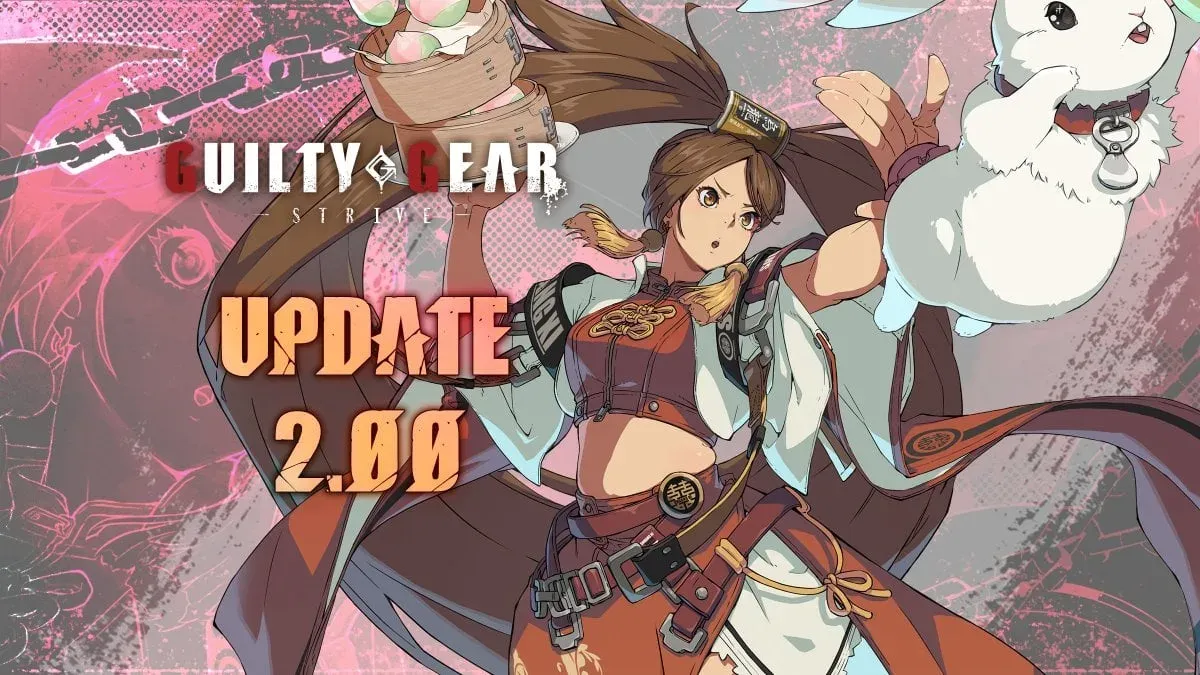
Jam Kuradoberi in Guilty Gear Strive is a Season 5 DLC fighter who arrived on April 9, 2026, alongside the major Version 2.00 update. She is a close-range rushdown character built around a unique card system: charge up her specials with Asanagi no Kokyuu, then spend those cards to make her three signature kicks faster, safer, and harder to deal with. If you want a character who snowballs momentum, overwhelms with overhead and low pressure, and rewards learning a mechanic that compounds every time you use it, Jam is the character.
How to get Jam Kuradoberi in Guilty Gear Strive
Jam is paid DLC, not part of the base roster. She launched on April 9, 2026, as the first character in Season Pass 5, paired with the free Version 2.00 update that reshaped the game.
- Individual DLC: $6.99
- Season Pass 5: $24.99 (includes Jam, Robo-Ky — released July 2, 2026 — and two more characters arriving Winter 2026 and Spring 2027, plus a bonus stage, character colors, and special skins)
Her release is documented in the official Arc System Works Season 5 announcement and the Ver. 2.00 patch notes. Jam has been in the Guilty Gear series since Guilty Gear X (2000), and Strive marks her return after her last appearance in Guilty Gear Xrd Rev 2.

Who is Jam Kuradoberi?
Arc System Works describes Jam as the Indomitable Iron Fist Chef: an in-fighter who overwhelms opponents with swift approaches and relentless mixups, accompanied by her new companion Usagi, a mysterious and agile rabbit who assists her in combat.
Her classic identity as a kung-fu chef who runs a Chinese restaurant carries over from her earlier appearances, but her Strive kit is built specifically around the card system rather than the older manual-charge variants from Xrd. If you played her before, the core identity is familiar; the execution is new.
Jam wins by getting in close and staying there. Her gameplan is simple to describe and demanding to stop: approach, charge a card, and spend it to create pressure where every option covers a different escape route.
Playstyle
Jam is a rushdown in-fighter with short-range normals that force her to close distance using her forward-moving specials. Her ideal round starts with a forward-moving approach, knocks the opponent down, and then runs overhead and low pressure off the resulting knockdown situation.
Her forward-moving specials are central to both approach and combos. Stubby normals mean she cannot simply stand and poke from mid-range; she has to earn close range. The card system is what makes her specials dangerous rather than readable: a spent card changes the speed and properties of the augmented move, so opponents who have clocked the base version still have to respect the card version.
Three things define how she plays:
- Approaching: limited normal range means her forward-moving specials are how she gets in and starts pressure. Jam rewards players who can thread approaches and bait reversals.
- Charging: Asanagi no Kokyuu (the 22 input) is the card-charging move. It has startup and leaves a window if done recklessly, but a banked card changes the next use of the matching special. Knowing when to charge and when to spend is the mechanical backbone of the character.
- Mixing: once Jam gets a knockdown, she wants to run overhead and low pressure using powered-up specials. Opponents who adapt to her base specials still have to respect the card versions on wakeup.
The card system: Asanagi no Kokyuu
Asanagi no Kokyuu is Jam’s signature mechanic. Inputting 22 with different buttons charges a card for each of her three special moves:
| Input | Card stocked | Move empowered |
|---|---|---|
| 22K | Ryuujin card | Ryuujin (flying kick) |
| 22S | Gekirin card | Gekirin (overhead jump kick) |
| 22H | Ryuutsui card | Ryuutsui (low advancing kick) |
Only one of each card can be stocked at a time. Holding the charge input builds all three cards at once, which is a meaningful change from her Xrd incarnation where max charging produced one card. Cards are consumed automatically the next time that special is used, so there is no separate spend input. A card is a passive upgrade waiting on the next activation.
The system creates a resource game layered on top of Jam’s rushdown. A round where you land a knockdown with all three cards stocked is a very different situation from one where you used them while approaching.
Key moves
Ryuujin (236K, flying kick)
Ryuujin (236K, air OK) is Jam’s most straightforward special: a forward-flying kick with 10-frame startup that covers ground. It is strong but very unsafe on block (around -35), so it works best as a committal approach off a read or as an easy combo ender, not a free neutral poke. With a Ryuujin card stocked it becomes a more threatening pressure option. Note that 236K only throws the kick; the 22K input charges its card without attacking.
Gekirin (236S, overhead jump kick)
Gekirin is the overhead component of Jam’s high/low game. As of Ver. 2.00, it has a 35-frame startup in its base form, but it becomes +7 on early cancel and +4 at the peak of the jump. With a Gekirin card stocked, startup drops to 29 frames and frame advantage improves to +6 on early cancel and +5 at peak (per Dustloop’s Jam frame data). Because it hits overhead, opponents who crouch to avoid Ryuutsui are vulnerable. The card version is what turns it from a slow read into a real threat.
Ryuutsui (236H, low advancing kick)
Ryuutsui is Jam’s low threat. It hits low, advances forward, and according to Dustloop is her most versatile special: it can mix the opponent, reset pressure, skip neutral, evade lows, and keep pressure going after a knockdown. A stocked Ryuutsui card does not speed up its startup, but it recovers far faster and swings the move from roughly -4 to +6 on block while traveling further, turning a committal low into a safe pressure and oki tool. The relationship between Gekirin (overhead) and Ryuutsui (low) from the same general distance and animation read is where Jam’s pressure lives.
c.S and 6K: the pressure engine
c.S (close Slash) is Jam’s best combo starter. Dustloop describes it as her “scariest normal to block” because of its speed, expansive gatling table, and high frame advantage. Learning what c.S gatlings into is the first step toward building real blockstrings.
6K is her primary frametrap from light normals. It is safe on block, multi-hitting, and pushes the opponent out with strong pushback. It bridges the gap from her fast pokes into a longer pressure sequence.
Jam Kuradoberi combos: where to start
Do not chase an optimal route on day one. Learn the structure first: confirm into a reliable ender, then layer in card-empowered specials once the basics are stable.
A beginner framework:
- Light-normal mash confirm:
[5P/2P] x2-3 > 236Kdeals 50-56 damage (per Dustloop). It is your simplest punish from a stray jab: fast and consistent, not optimal, but it works in real matches. 236K is Ryuujin, and its 10-frame startup makes it the easy meterless ender, out-damaging a charged 5[D] with far less setup. - c.S starter confirm:
c.S > 2H > 236H. c.S is her best starter (7 frames, +3 on block); the 2H launcher feeds into Ryuutsui (236H), which knocks the opponent down in front for okizeme. Once that is stable, extend with> 2K > 6Hinto an ender. Note the endings differ: the jab confirm caps with 236K (Ryuujin), the c.S route with 236H (Ryuutsui), so do not try to force c.S straight into 236K.
Once the basic confirm is muscle memory, add Ryuutsui follow-ups after a knockdown using a stocked card. That is where Jam’s damage and oki (wakeup pressure) start to stack. Pull current optimal routes from Dustloop’s Jam combo page, which tracks live patch values.
All frame data here is from Ver. 2.00 (April 2026) and subject to patch changes.
Strengths and weaknesses
Strengths:
- Momentum machine. A knockdown with cards stocked is a full mixup opportunity. Jam snowballs when she gets going, because each knockdown feeds the next pressure sequence.
- Card amplification. The card system turns already-strong specials into tools opponents have to respect differently at a moment’s notice. A Ryuutsui with a card is not the same move without one.
- Real overhead and low threat. Gekirin and Ryuutsui cover overhead and low from a similar range and general approach read. Once opponents know her base specials, the card versions punish the adjustment.
- c.S frame advantage. Her best normal has the frame advantage and gatling options to sustain real blockstrings rather than two-hit staggers.
Weaknesses:
- Short range. Her normals are stubby. If her approaches get shut down and she cannot close the gap, her offense stalls.
- Charge risk. Asanagi no Kokyuu has startup. Charging at the wrong moment gives the opponent a free punish or a reset into their own pressure.
- Approach predictability. Without cards, her specials are more telegraphed. Against players who know the matchup, the approach game requires patience and baiting before the card system starts masking the reads.
Tier standing in 2026
Tier data is volatile, especially for recently released DLC characters who tend to receive tuning patches after the community discovers what is strong. Treat this as a snapshot.
As of Ver. 2.00 (April through June 2026), Jam entered the meta as a top-tier character. Bushin’s day-1 list covered by EventHubs groups her alongside Nagoriyuki, Chipp, Millia, Anji, and Leo as having the potential to be among the best characters in the current patch. Community matchup rankings on EventHubs’ Jam tier page reflect the same consensus. This reflects her launch state and may shift with future balance updates.
For where she lands relative to the full cast right now, see our Guilty Gear Strive tier list. And if you are also curious about the competitive ranking system, Guilty Gear Strive ranks explained covers the ladder from floor to Celestial.
How to start as Jam (beginner steps)
Learn these in order:
- One movement tool: practice Bakushuu (214S), the low-profile dash Dustloop calls the cornerstone of her neutral; it covers ground fast and slips under mid-height pokes to get you in. Ryuujin (236K) is her committal flying-kick approach, but it is very unsafe on block, so lean on Bakushuu to actually close distance. If you cannot get in safely, nothing else in her kit functions.
- c.S confirm: from close range, land
c.S > 2H > 236Hand drill it until it is automatic, then check the combo page for cleaner routes. - 22H (Ryuutsui card): once the basic confirm is consistent, practice charging the Ryuutsui card in neutral. It is the most immediately impactful card for pressuring knockdowns.
- One charged special on wakeup: after a knockdown, spend your Ryuutsui card on the opponent’s wakeup. Feel the difference in timing and frame advantage. This is the moment the card system becomes tangible rather than theoretical.
Spend time in training mode with the card indicator visible. Knowing which cards are stocked is the whole character.
FAQ
Is Jam Kuradoberi DLC in Guilty Gear Strive? Yes. Jam is the first character in Season Pass 5, released April 9, 2026. She costs $6.99 individually or $24.99 as part of Season Pass 5, which includes four total DLC characters.
Was Jam in Guilty Gear before Strive? Yes. Jam has been in the series since Guilty Gear X (2000) and appeared through Guilty Gear Xrd Rev 2. Strive is her first entry in the GGST era.
What type of character is Jam in GGST? Jam is an in-fighter: a rushdown character with short-range normals and forward-moving specials. Her card system gives her specials variable speed and frame properties depending on whether a card is stocked. Arc System Works officially describes her as the “Indomitable Iron Fist Chef.”
What tier is Jam in Guilty Gear Strive? As of Ver. 2.00 (April through June 2026), Jam is generally placed in the top tier on community lists. This is a launch-period snapshot that can shift with patches. For current standings, see our Guilty Gear Strive tier list.
Is Guilty Gear Strive crossplay? Yes. For a full breakdown of which platforms can play together, see Is Guilty Gear Strive crossplay?.
Sources
- Guilty Gear -Strive- Version 2.00 patch notes, April 8, 2026 (official)
- Arc System Works: Season 5 / Ver. 2.00 launch announcement
- Jam Kuradoberi: Dustloop Wiki (GGST)
- Jam Kuradoberi frame data: Dustloop Wiki (GGST)
- Jam Kuradoberi combos: Dustloop Wiki (GGST)
- Jam Kuradoberi starter guide: Dustloop Wiki (GGST)
- Jam Kuradoberi strategy: Dustloop Wiki (GGST)
- Jam Kuradoberi moves list: EventHubs
- Jam Kuradoberi tier matchups: EventHubs
- Bushin day-1 GGST Ver. 2.00 tier list: EventHubs
- Jam starter guide reveal: EventHubs
- Jam Kuradoberi moveset in her starter guide: Siliconera
- Season 5 / Jam announcement: Gematsu
- Guilty Gear -Strive- Ver. 2.02 patch notes, July 1, 2026 (official, confirms Robo-Ky’s release)